Some businesses think using larger shipping boxes makes packing easier. There is more room inside, more space for padding, and less worrying about whether the product will fit. But oversized boxes can quietly create problems that cost companies money over time.
A box that is too large often leaves empty space around the product.
That may not sound like a big deal, but during shipping, products move constantly. Packages get tossed onto conveyor belts, stacked inside trucks, and pushed around warehouses for hours or even days. If items slide around inside the box the whole time, damage becomes much more likely.
That is why proper box size matters more than many people expect.
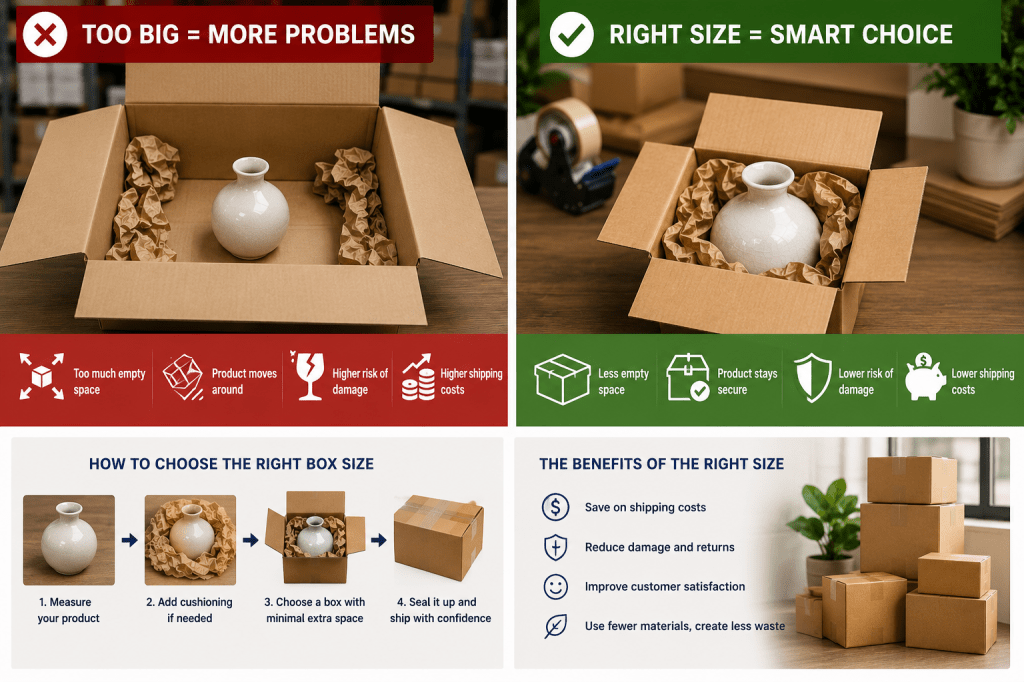
One common question businesses ask is how to know which shipping box size works best. A good box should fit the product closely without squeezing it too tightly. There should be enough room for cushioning materials if needed, but not so much space that the item shifts around during transit.
Using the right size can also lower shipping costs.
Many delivery companies now charge based on package dimensions as well as weight. Large boxes take up more space on trucks and sorting equipment. Even lightweight shipments can become expensive if the packaging is oversized. Smaller boxes often help businesses save money while reducing wasted materials.
People also ask whether stronger boxes are always necessary. Not every shipment needs thick heavy-duty corrugated cardboard. Lightweight products like shirts or hats may ship safely in thinner packaging. Fragile or heavy items, though, usually need stronger shipping boxes that can handle stacking pressure and rough handling during transit.
Another thing businesses sometimes overlook is storage space.
Large shipping boxes take up room quickly inside warehouses or stock areas. Keeping too many oversized boxes can make packing stations crowded and disorganized. Some companies now keep multiple box sizes available so workers can match packaging more closely to the order being shipped.
Customers notice packaging too.
A giant box arriving with one tiny item inside can feel wasteful to many buyers. Some customers get frustrated seeing piles of unnecessary filler materials just to protect a small product. Businesses using better-sized shipping boxes often create cleaner-looking deliveries while reducing packaging waste at the same time.
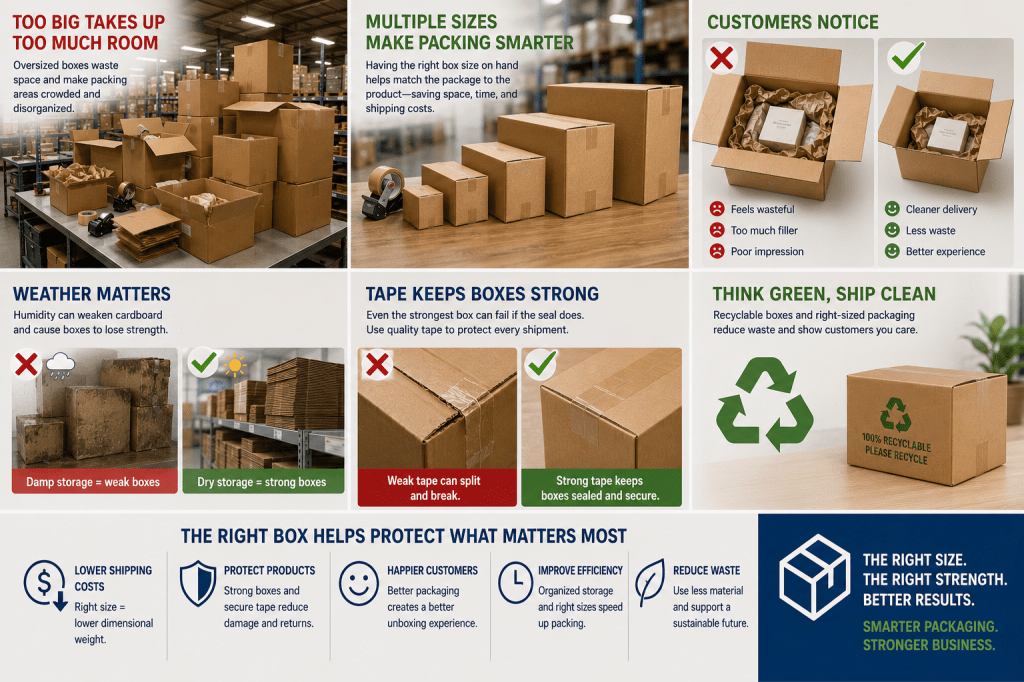
Weather can affect boxes more than people realize as well. Cardboard stored in humid areas may weaken before it is even used. Damp boxes lose strength and may crush more easily during shipping. Keeping shipping boxes dry and stacked properly helps them stay strong longer.
Tape plays an important role too. Even a strong box can fail if the seal comes apart during transit. Heavy shipments especially need reliable tape to keep flaps secure while moving through trucks and warehouses. Weak tape can lead to split seams and damaged orders very quickly.
There is also growing demand for recyclable shipping boxes. Many businesses are trying to reduce waste by using recyclable cardboard and avoiding oversized packaging whenever possible. Customers who care about the environment often appreciate companies making those efforts.
Shipping boxes may look simple sitting flat in storage, but they affect shipping costs, product safety, customer experience, and business efficiency every day. Choosing the right box size and strength can prevent many common shipping problems before they ever happen.
 Proper Nestification