Tag: travel

This box saved the shipment

You pack an item, close the flaps, and send it out. It looks clean and neat. Then you hear it arrived with dents or damage. That is when you realize something simple made a big difference. The shipping box you chose can either protect your item or put it at risk.

Many people do not think much about the box itself. They focus on tape or filler, but the box is what holds everything together. If the box is weak or not the right type, the rest of your effort may not matter.
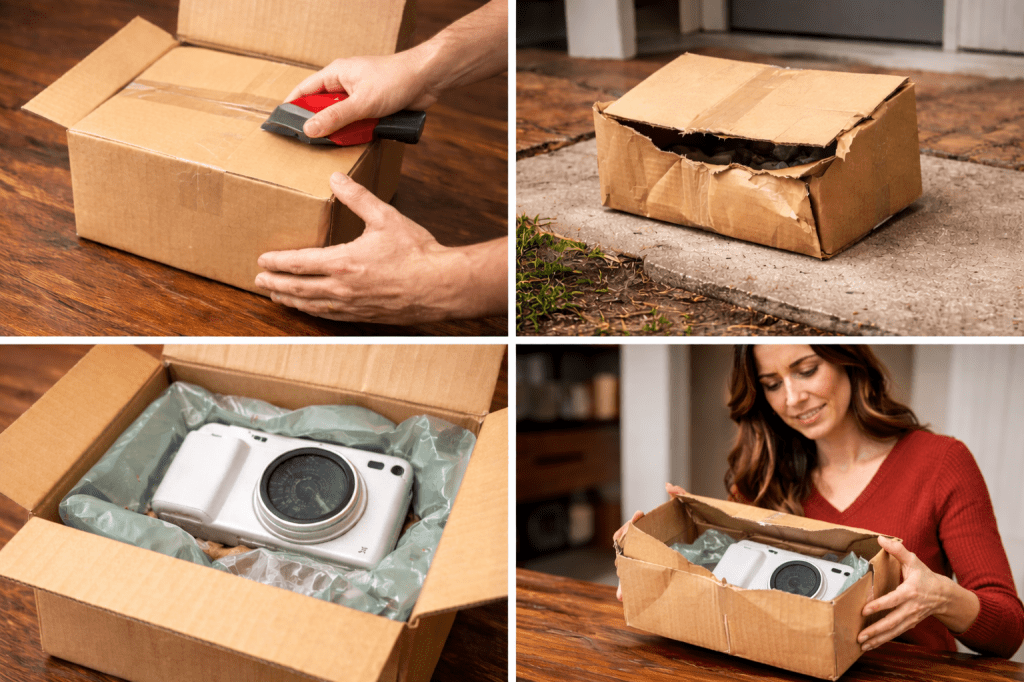
Think about a long trip. Your package moves through many hands and machines. It may slide down a belt, get stacked with other boxes, and sit under weight for hours. During all of this, the box is what takes the pressure first.

There are different kinds of shipping boxes, and each one is made for a purpose. Some are light and good for small items. Others are thick and strong for heavier loads. If you match the box to the item, you give it a better chance to arrive safely.

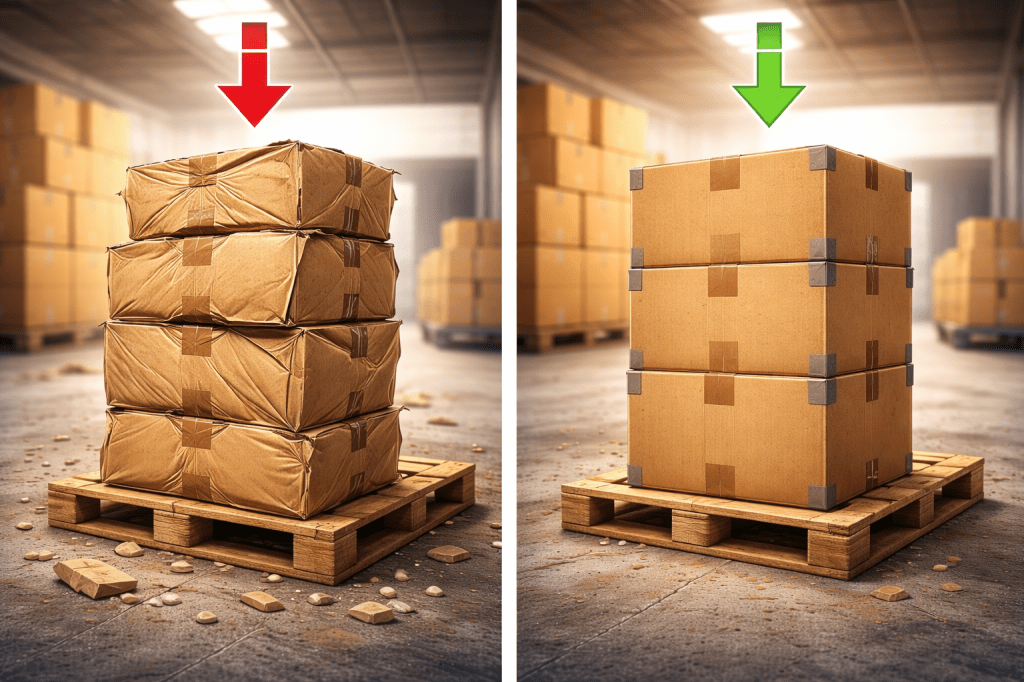
A strong box feels firm when you press on it. The sides do not bend easily, and the bottom feels solid. This helps the box keep its shape when weight is placed on top. When the shape holds, the item inside stays protected.

Now think about a thin box holding something heavy. At first, it may look fine. But once it is lifted and moved, the bottom can start to sag. The sides may bow out. That puts stress on the item inside, and that is when problems begin.

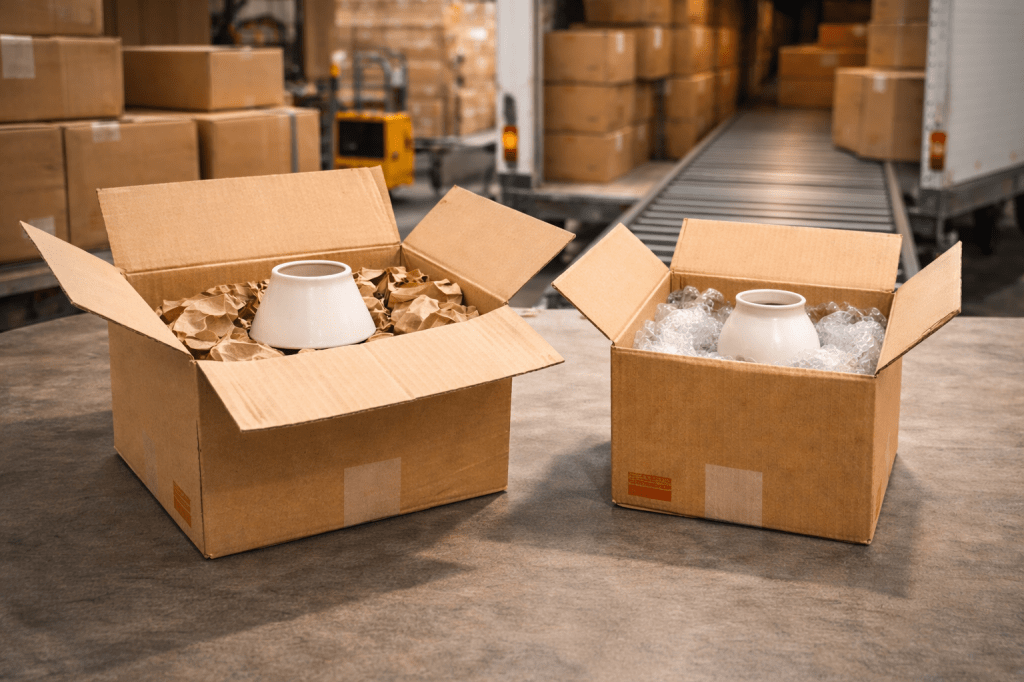
Size also plays a role. A box that fits well helps keep everything steady. When the item sits in the middle with room for padding, it is less likely to move. When the box is too large, the item can shift and bump around. When it is too small, there is no room to protect it.

Another thing people miss is how the box closes. The flaps should meet flat and even. If they do not line up well, the seal may not be strong. A good fit helps the tape hold better and keeps the box closed during the trip.
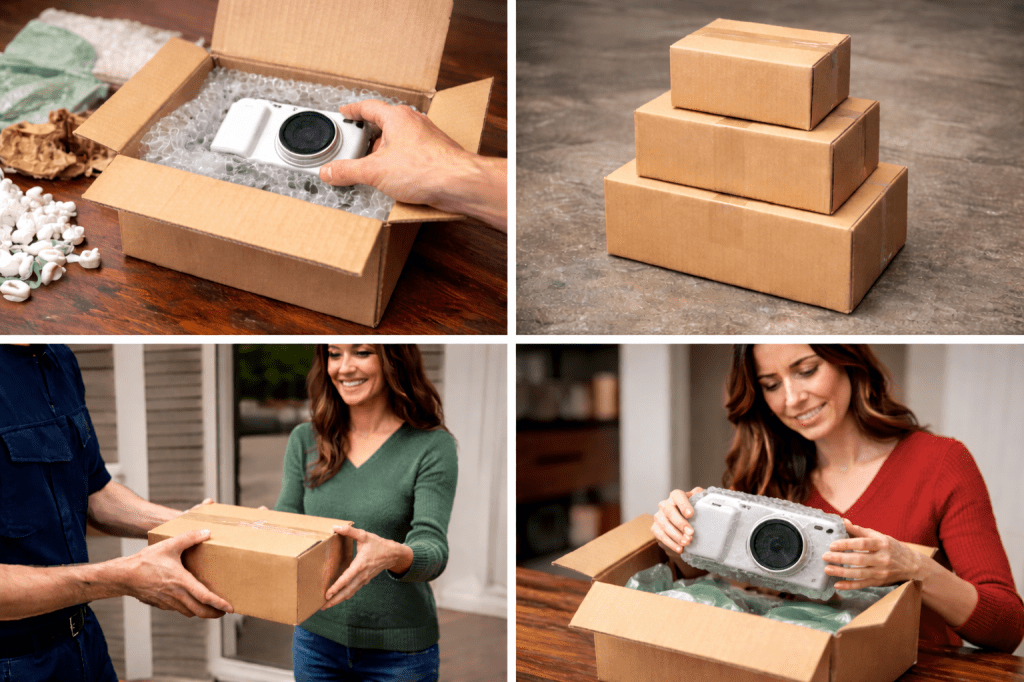
Before you pack, take a moment to think about the path your box will take. Will it be stacked high? Will it carry weight? Will it move a lot? When you picture this, it becomes easier to choose the right box.

There is also a simple test you can do. After packing, lift the box and hold it for a second. Does it feel solid, or does it feel like it might give under pressure? That quick check can tell you if the box is doing its job.

When you choose the right shipping box, you are not just picking a container. You are choosing how your item will be protected from start to finish. The box supports the padding, holds the shape, and takes the hits along the way.

At the end of the trip, the person opening the package does not think about the box. They only notice that everything inside looks right. That simple result starts with choosing a box that can handle the journey.


Stop Damaged Shipments

Few things frustrate a business owner more than hearing that a product arrived damaged. The item left the warehouse in perfect condition, yet by the time it reached the customer it was bent, cracked, or scratched. Many times, the product itself is not the problem. The real issue is the shipping box that carried it.

Shipping boxes are more than simple containers. They act as the outer shield for the product during its entire journey. Packages travel through busy sorting centers, slide across conveyor belts, and spend hours inside delivery trucks. During this process they may be stacked under other packages or moved quickly from one place to another. Without strong shipping boxes, the items inside can experience a surprising amount of pressure and movement.

A common question business ask is how shipping boxes help prevent damaged deliveries. The answer begins with strength. Corrugated shipping boxes are designed to handle the bumps and weight that happen during shipping. Their layered structure adds durability without making the box too heavy. This balance of strength and light weight makes corrugated boxes one of the most widely used packaging solutions.

Another important factor is how the box fits the product. When an item has too much empty space inside the box, it can slide during transit. Each movement increases the chance that the item will strike the side of the box. Over time, repeated contact can lead to cracks or dents. A properly sized shipping box helps hold the product in place so it remains stable during the trip.

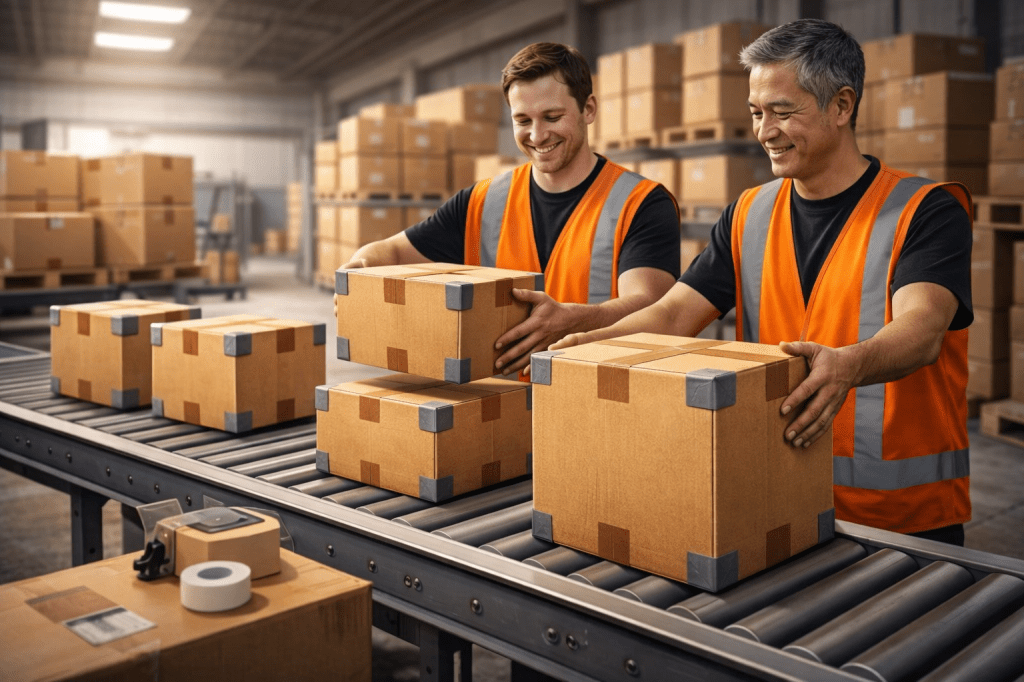
Many businesses also wonder how shipping boxes influence packing speed. When workers have access to the right box sizes, the packing process becomes much smoother. Instead of searching for a box that might fit, they can quickly choose the correct one. Orders move through the packing station more efficiently, helping businesses keep up with growing demand.

Shipping boxes also contribute to the customer’s first impression when a package arrives. Imagine receiving a box that feels weak or crushed before it is even opened. The experience can create worry about what might be inside. On the other hand, a strong shipping box that holds its shape signals that the contents were protected during transit. That feeling builds trust between the business and the buyer.

Another reason shipping boxes matter is their role in shipping costs. Carriers often calculate shipping rates based on both weight and size. Using boxes that match the product helps avoid paying for unused space. This practical approach allows businesses to control shipping expenses while still protecting their items.

Environmental responsibility is also becoming part of the conversation around shipping boxes. Many corrugated boxes are recyclable, which helps reduce waste after the package is opened. Customers often appreciate packaging that can be easily recycled rather than thrown away.

Understanding shipping boxes is an important step for any business that ships products. The box may seem like a simple part of the process, but it quietly protects each order during a journey that may involve many miles and several handling points.

When the right shipping boxes are chosen, products stay secure, packing becomes easier, and customers receive their orders exactly as expected. In the world of shipping, a dependable box can make the difference between a damaged delivery and a satisfied customer who looks forward to ordering again.

Are You Using the Wrong Size?

Many shipping problems begin with a simple mistake: using the wrong size box. It may not seem like a big issue at first. The item fits inside. The flaps close. The label goes on. But size plays a major role in protection, cost, and customer experience.

When a shipping box is too large, empty space becomes the enemy. During transit, packages are lifted, tilted, stacked, and moved quickly. If there is extra room inside, the product can shift with every motion. Each shift increases the chance of dents, cracks, or scratches. Even strong items can become damaged when they slide repeatedly inside a box.

To prevent this, the product should sit inside with only enough space for cushioning. Padding such as packing paper or protective wrap should fill the remaining gaps so that the item stays in place. If you can shake the box and hear movement, it likely needs adjustment.

On the other hand, a box that is too small can also create problems. When an item is forced into tight space without room for protective material, the box walls take direct pressure. This can lead to bulging sides or split seams. Proper spacing allows for protection without putting strain on the structure.

Shipping cost is another reason size matters. Carriers often calculate rates based on dimensional weight, which means the overall size of the box affects pricing. A larger box with unused space may cost more to ship than a smaller one that holds the same product securely. Choosing a box that fits properly can help control expenses while still maintaining protection.

Strength should match size as well. Larger boxes may require thicker corrugated material to handle stacking pressure. Smaller boxes carrying heavy items also need strong walls to prevent collapse. The balance between size and strength ensures the box performs well during handling.

Storage and organization benefit from correct sizing too. Uniform box sizes stack neatly in storage areas and shipping stations. This reduces clutter and speeds up packing time. When boxes are easy to access and consistent in size, workflow becomes smoother.

Testing remains one of the most effective tools. Place the product inside the selected box with appropriate cushioning. Close and seal it. Gently shake it to confirm that nothing moves. Press lightly on the top to check for flexibility. These small checks can reveal whether the size and strength are appropriate.

Recyclability can also influence the decision. Many standard cardboard boxes are recyclable and reusable. Choosing a well-sized box reduces the need for excessive filler materials, which can further limit waste.

Customers often judge the experience before they even see the product. A box that is far too large for a small item can feel careless. A properly sized box communicates attention to detail. It suggests that care was taken in preparing the shipment.

Shipping boxes are not one-size-fits-all solutions. Each product may require a slightly different approach based on weight, fragility, and travel distance. Taking the time to match box size to the item inside reduces damage, lowers shipping costs, and improves the overall delivery experience.

In the end, selecting the right size shipping box is about more than convenience. It is about protection, efficiency, and presentation. When the fit is correct, the journey from sender to recipient becomes far more reliable.

How Good Shipping Boxes Make Shipping Easier Every Day

Shipping problems often feel like they come from many places at once. Delays. Damage. Repacking. Customer complaints. In many cases, these issues trace back to one simple source: the shipping box.

When shipping boxes are chosen carefully and used consistently, daily operations become smoother. When they are not, small problems repeat themselves over and over.

Good shipping boxes quietly remove friction from the shipping process.

Shipping Boxes Reduce Decision Fatigue

Packing orders requires many small decisions. Which box to use. How much padding is needed. Whether the box feels strong enough.

When shipping boxes vary in size, strength, or quality, employees must stop and reassess each order. This slows packing and increases the chance of mistakes.

Using standardized shipping boxes removes that guesswork. Employees know which box to grab and how it will perform. Packing becomes routine instead of uncertain.

Fewer decisions lead to faster, more consistent packing.

Faster Packing Without Cutting Corners

Good shipping boxes speed up packing without sacrificing protection.

Boxes that fold cleanly save time. Boxes that hold their shape do not need reinforcement. Boxes that fit the product well require less filler.

When boxes perform as expected, packing stations flow smoothly. Orders move through without pauses to fix issues or add extra materials.

This efficiency compounds across many orders, saving time throughout the day.

Shipping Boxes Help Prevent Rework

Repacking costs time and materials.

When a box feels weak or poorly sized, employees may reopen it to add more padding or switch boxes entirely. This rework slows fulfillment and increases waste.

Strong, right-sized shipping boxes reduce the need for repacking. Once an order is packed and sealed, it stays that way.

Preventing rework improves productivity and reduces frustration for packing teams.

Better Boxes Mean Fewer Interruptions

Damaged shipments interrupt normal operations.

Customer service must respond. Replacement orders must be packed. Inventory must be adjusted. Each interruption pulls attention away from new orders.

Reliable shipping boxes reduce damage rates. Fewer damaged shipments mean fewer interruptions and a more predictable workflow.

Over time, this stability improves overall efficiency and morale.

Consistency Supports Scaling

As order volume grows, small inefficiencies become larger problems.

Shipping boxes that work well at low volume may fail when shipments increase. Weak boxes collapse under heavier stacking. Inconsistent box choices slow packing as teams grow.

Using dependable shipping boxes creates a foundation that supports growth. The same boxes and packing methods can be used consistently as volume increases.

This makes scaling easier and less chaotic.

Shipping Boxes and Storage Efficiency

Shipping boxes also affect storage.

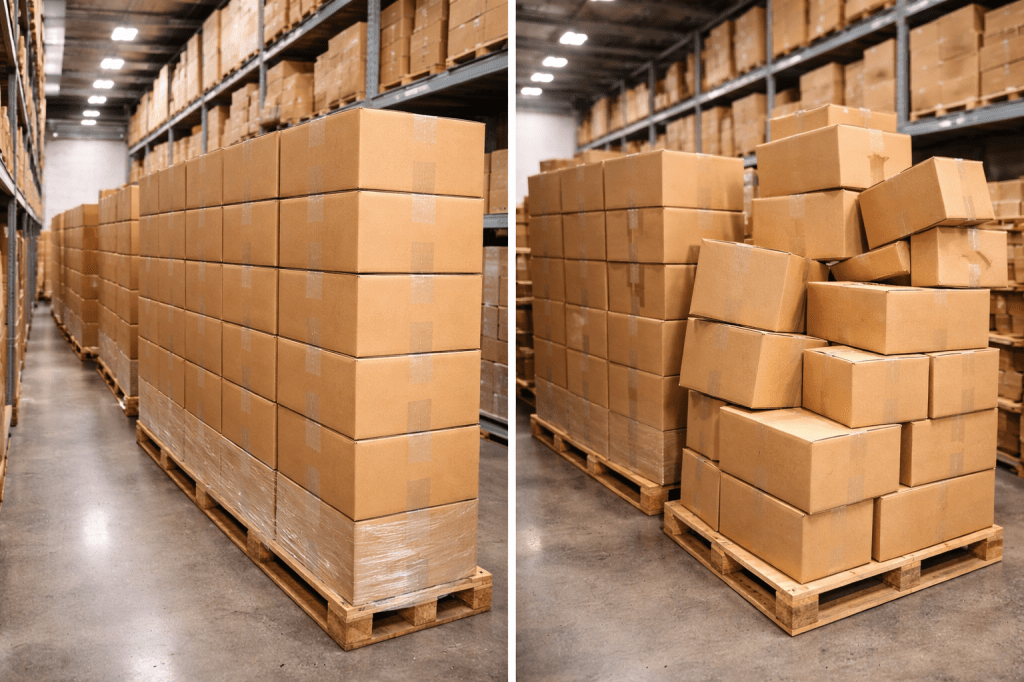
Boxes that stack properly make better use of warehouse space. Uniform box sizes create stable stacks and reduce the risk of collapse.

Inconsistent box shapes and strengths create uneven stacks that waste space and increase handling risk.

Well-chosen shipping boxes improve organization and safety in storage areas.

Customer Experience Benefits From Simplicity

Customers experience the results of good shipping boxes even if they never think about them.

Orders arrive intact. Boxes open cleanly. Products look cared for. These details create a positive experience without drawing attention to the packaging itself.

Customers feel confident ordering again because the delivery experience was smooth and predictable.

Shipping Boxes as a Daily Tool

Shipping boxes are used every day, often hundreds of times.

Because they are so common, their impact is easy to overlook. But when shipping boxes perform reliably, they simplify many parts of the shipping process at once.

Good shipping boxes reduce decisions, speed up packing, prevent rework, and support consistent results. They make daily operations easier by quietly doing their job.

When shipping boxes work well, shipping becomes less stressful and more efficient from the first order to the last.

Pick the Right Box

Choosing a shipping box should be simple.

But it usually isn’t.

Most people stand there looking at a stack of boxes thinking they all do the same job. So they grab one that looks close enough and move on. Sometimes it works. Sometimes it doesn’t. And when it doesn’t, that is when damage, returns, and wasted time start to show up.

So how do you actually pick the right box? Start with the item itself. Not just the size, but the shape and weight. A long narrow item behaves differently than a flat one. A heavy item puts stress on the bottom in a way a light one never will. If you ignore that and treat every product the same, you are setting yourself up for problems.

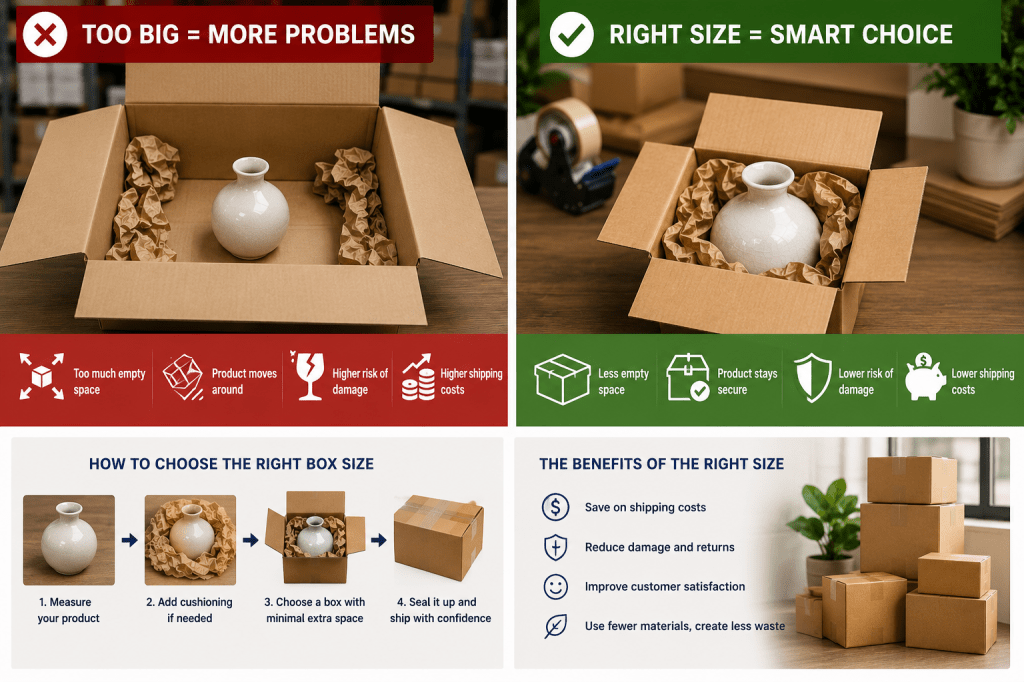
A box that is too big feels safe at first. There is room, it is easy to pack, nothing feels forced. But that extra space turns into movement. Movement turns into impact. And impact turns into damage. You might not see it on the outside, but inside the item is taking small hits the entire trip.

Man examining oversized and undersized packaging with labels explaining waste and damage scenarios
Man comparing oversized and undersized packaging effects in warehouse

Too small can be just as bad. If the item is squeezed in, there is no space for protection. No cushion, no barrier between the product and the outside world. Even a strong box cannot help much if everything inside is pressed tight against the walls.

So, the goal is simple, but it takes a little attention. You want a box that gives just enough room for protection without leaving extra space to move.

Now think about what happens after it leaves your hands. Boxes do not travel alone. They get stacked, shifted, and handled by machines and people moving fast. That means your box needs to hold up under pressure from all sides. If it is too light for the job, it may start to bend or bow. Once that happens, everything inside is at risk.

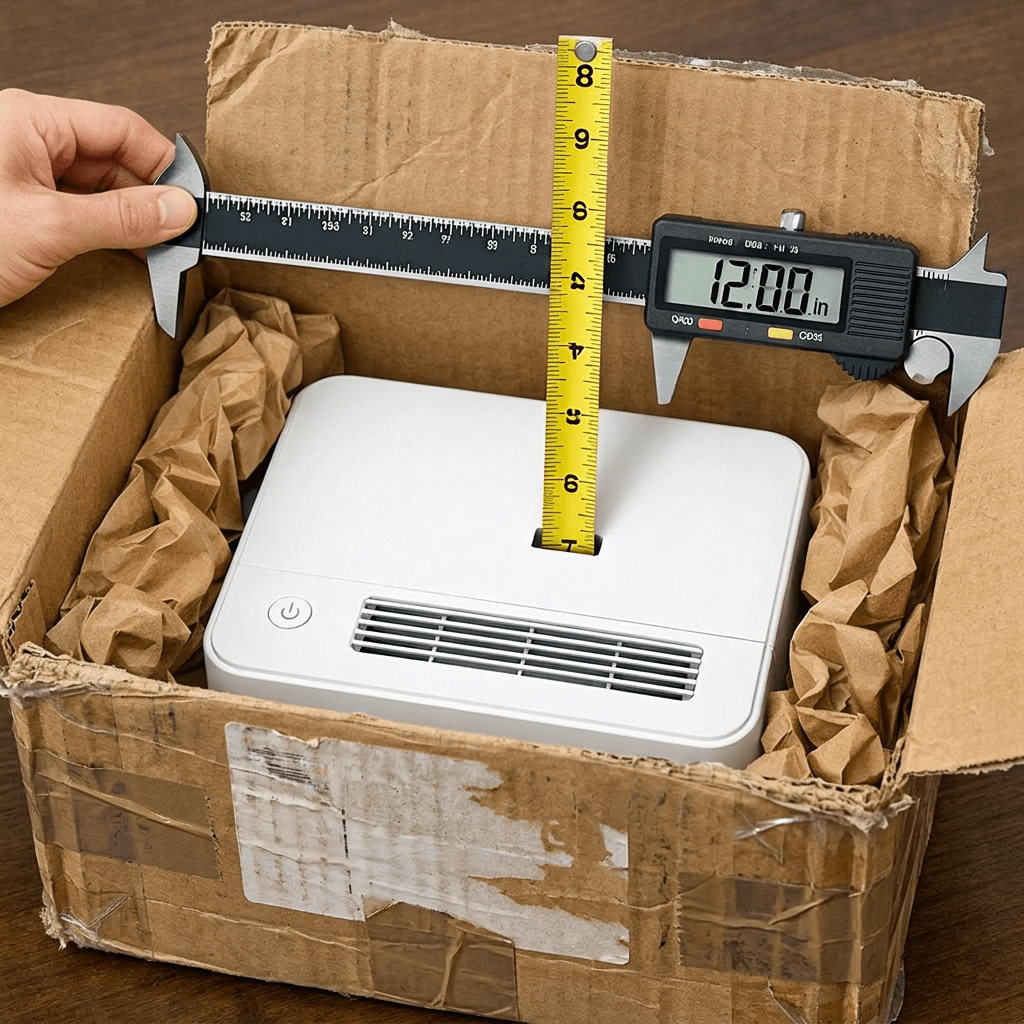
Digital caliper and tape measure measuring a white electronic device inside a cardboard box
Using calipers and a tape measure to check an item’s size inside a cardboard box

A common question is how to know if a box is strong enough. You can start by looking at the weight of your item and choosing a box designed to handle that load. Heavier items need stronger walls. Items with sharp edges may need extra padding so they do not press into the box itself. It is not about overbuilding. It is about matching strength to need.

There is also the issue of repeat use. Some people reuse boxes to save money. That can work, but only if the box is still in good shape. If it has soft spots, bent corners, or worn edges, it has already lost strength. Using it again adds risk. It may hold once, but fail the next time.

Another thing to consider is packing consistency. If different people are packing orders, each one may choose a different box for the same item. That leads to uneven results. Some packages arrive perfect, others do not. Creating a simple system for which box goes with which product can fix that. It removes guesswork and makes results more reliable.

And then there is the final check. Before sealing, take a quick look. Is the item centered? Is there enough support inside? Are the flaps closing cleanly? It takes a few seconds, but it can catch problems before they leave your hands.

Shipping boxes are not just containers sitting on a shelf. They are part of the process that protects your product all the way to the customer.

Pick the right one, and things tend to go smoothly. Pick the wrong one, and small issues start stacking up fast.

Bigger Boxes Waste Money

Some businesses think using larger shipping boxes makes packing easier. There is more room inside, more space for padding, and less worrying about whether the product will fit. But oversized boxes can quietly create problems that cost companies money over time.

A box that is too large often leaves empty space around the product.

That may not sound like a big deal, but during shipping, products move constantly. Packages get tossed onto conveyor belts, stacked inside trucks, and pushed around warehouses for hours or even days. If items slide around inside the box the whole time, damage becomes much more likely.

That is why proper box size matters more than many people expect.

One common question businesses ask is how to know which shipping box size works best. A good box should fit the product closely without squeezing it too tightly. There should be enough room for cushioning materials if needed, but not so much space that the item shifts around during transit.

Using the right size can also lower shipping costs.

Many delivery companies now charge based on package dimensions as well as weight. Large boxes take up more space on trucks and sorting equipment. Even lightweight shipments can become expensive if the packaging is oversized. Smaller boxes often help businesses save money while reducing wasted materials.

People also ask whether stronger boxes are always necessary. Not every shipment needs thick heavy-duty corrugated cardboard. Lightweight products like shirts or hats may ship safely in thinner packaging. Fragile or heavy items, though, usually need stronger shipping boxes that can handle stacking pressure and rough handling during transit.

Another thing businesses sometimes overlook is storage space.

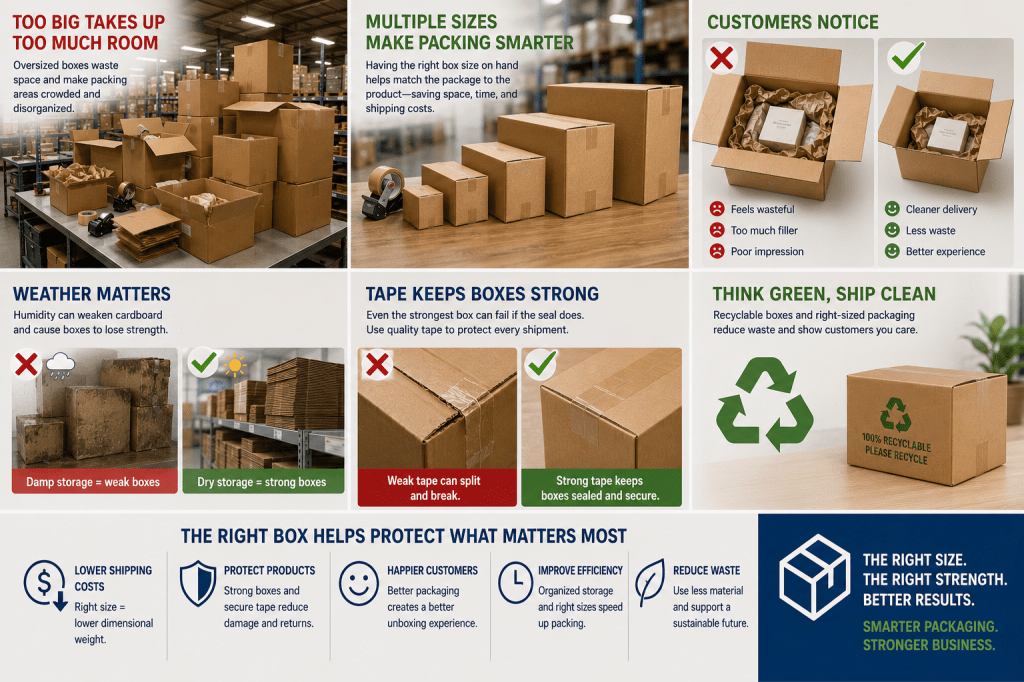
Large shipping boxes take up room quickly inside warehouses or stock areas. Keeping too many oversized boxes can make packing stations crowded and disorganized. Some companies now keep multiple box sizes available so workers can match packaging more closely to the order being shipped.

Customers notice packaging too.

A giant box arriving with one tiny item inside can feel wasteful to many buyers. Some customers get frustrated seeing piles of unnecessary filler materials just to protect a small product. Businesses using better-sized shipping boxes often create cleaner-looking deliveries while reducing packaging waste at the same time.

Weather can affect boxes more than people realize as well. Cardboard stored in humid areas may weaken before it is even used. Damp boxes lose strength and may crush more easily during shipping. Keeping shipping boxes dry and stacked properly helps them stay strong longer.

Tape plays an important role too. Even a strong box can fail if the seal comes apart during transit. Heavy shipments especially need reliable tape to keep flaps secure while moving through trucks and warehouses. Weak tape can lead to split seams and damaged orders very quickly.

There is also growing demand for recyclable shipping boxes. Many businesses are trying to reduce waste by using recyclable cardboard and avoiding oversized packaging whenever possible. Customers who care about the environment often appreciate companies making those efforts.

Shipping boxes may look simple sitting flat in storage, but they affect shipping costs, product safety, customer experience, and business efficiency every day. Choosing the right box size and strength can prevent many common shipping problems before they ever happen.

Choose Boxes That Last

A shipping box has one job, but it has to do it for a long time. From the moment it is packed until the moment it is opened, that box faces pressure, movement, and conditions it cannot control. Choosing boxes that last through that entire journey makes the difference between a smooth delivery and a costly problem.

Many boxes fail because they are only designed for short handling, not long travel. They look fine when packed, then weaken as hours pass. Each transfer adds stress. Each stack adds weight. Shipping boxes that are built to last maintain their shape and strength even after repeated handling.

Durability starts with structure. A strong box holds its form when lifted from the bottom and the sides. It does not bow or sag underweight. When a box stays square, it distributes pressure evenly and protects what is inside. That balance prevents strain from focusing on one weak point.

Material quality also plays a role. Cardboard that compresses too easily loses strength quickly. Boxes made from sturdier material resist crushing and hold up better under stacking pressure. That resistance keeps products safe even when packages are piled high in transit.

Longevity matters inside the box as well. A box that flexes too much transfers movement to the contents. Over time, that movement causes wear and damage. Shipping boxes that stay firm reduce internal shifting and keep protection doing its job.

Another factor is how boxes perform under changing conditions. A box may travel through dry air, damp warehouses, or humid trucks. Boxes that absorb moisture weaken as they go. Shipping boxes designed to resist moisture maintain integrity longer and reduce the risk of collapse late in the journey.

Consistency is part of durability too. Boxes that perform the same way every time help teams pack confidently. Workers know how much weight they can carry and how the box will behave. That predictability speeds up packing and reduces mistakes.

Customers notice lasting quality the moment the box arrives. A box that looks strong and clean reassures them before they even open it. It suggests care, reliability, and attention to detail. That feeling shapes how they view the product and the brand behind it.

There is also a practical benefit. Durable shipping boxes reduce the need for extra reinforcement. Less tape, fewer inserts, and fewer replacements save time and money. Strong boxes simplify the entire shipping process.

Choosing boxes that last also supports sustainability. Fewer damaged shipments mean fewer resends and less waste. Durable boxes help reduce unnecessary use of materials while keeping deliveries reliable.

Shipping boxes are not just containers. They are long-distance protectors. When chosen for durability, they stand up to pressure, weather, and time. And when a box lasts from packing to delivery without failing, it quietly proves it was the right choice all along.

Why Strong Boxes Reduce Customer Complaints

Customer complaints rarely start with the product alone. More often, they begin with how the product arrived. Shipping boxes play a major role in shaping that experience.

When a box shows up crushed or damaged, customers expect the worst. They open it cautiously, already frustrated. Even if the product survives, the negative feeling stays.

Weak shipping boxes create unnecessary problems. Thin walls bend under pressure. Corners collapse when stacked. Seams split when tape can’t compensate for poor construction. Each failure increases the chance of a complaint.

Carriers move packages through rough conditions. Boxes get stacked under heavier shipments. They slide across belts. They’re handled quickly and repeatedly. If a box isn’t built for that environment, it won’t hold up.

Strong shipping boxes resist those forces. They keep their shape. They protect corners. They hold seams together. When the box survives, the product inside is far more likely to survive too.

Many businesses try to offset weak boxes with extra tape or extra fill. While that may help in the short term, it slows down packing and raises costs. It also signals that the box itself isn’t doing its job.

Good shipping boxes simplify packing. They don’t need reinforcement. They fold cleanly. They seal easily. Staff can work faster without worrying about failure.

Customer complaints cost more than most people realize. They take time to resolve. They require replacements or refunds. They damage trust. Even when handled well, complaints leave a mark.

Reducing complaints starts with prevention. Strong shipping boxes prevent damage before it happens. They reduce the situations that trigger frustration in the first place.

There’s also a visual element. Customers judge care based on appearance. A crushed box suggests neglect. A solid box suggests professionalism. That judgment happens instantly.

Strong boxes also reduce internal stress. Fewer damaged shipments mean fewer interruptions. Customer service handles fewer issues. Fulfillment teams spend less time fixing mistakes.

As order volume grows, the impact of box quality multiplies. What fails occasionally at low volume fails frequently at scale. Complaints increase. Costs rise. Growth slows.

Choosing strong shipping boxes early creates stability. It supports growth without adding friction. It protects both products and reputation.

Shipping boxes don’t get credit when things go right. They only get noticed when they fail. That’s why failure prevention matters more than recognition.

When boxes do their job well, customers stay focused on the product, not the problem. Complaints stay low. Trust stays intact.

That’s the quiet value of strong shipping boxes. They reduce issues most customers never see, and that’s exactly the point.

Read this before shipping

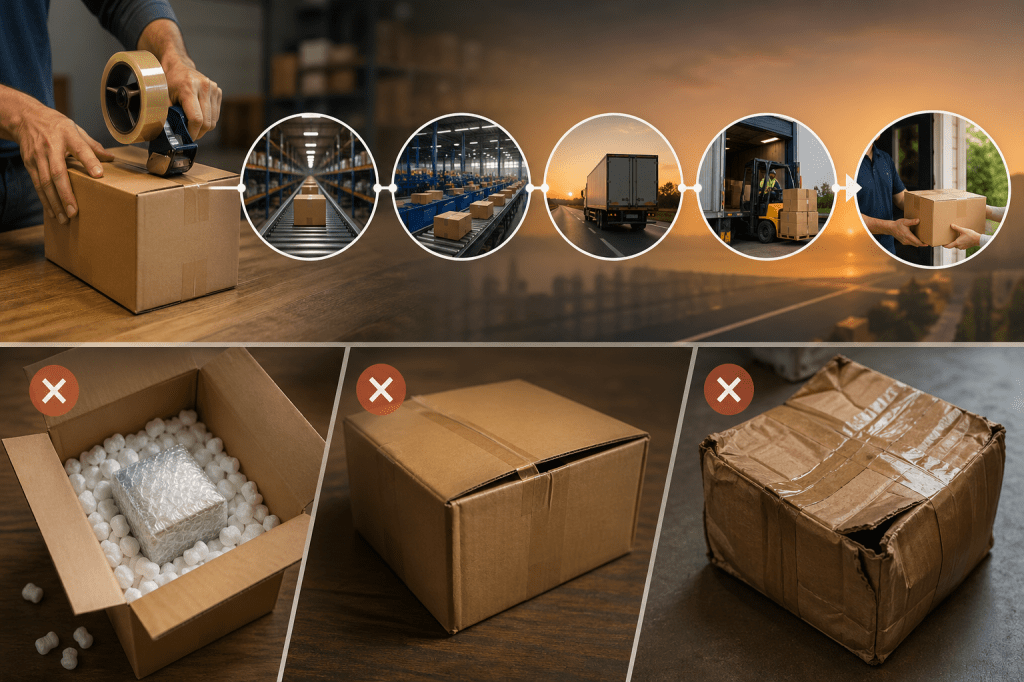
Before you send your next package out, pause for a second and think about what really happens after it leaves your hands. It doesn’t go straight from your table to your customer’s doorstep. It moves through a chain of events that most people never see, and every step puts pressure on the box you chose.

That’s where things either hold up… or fall apart.

A lot of shipping problems don’t come from big mistakes. They come from small oversights that feel harmless at the time. Using a box that feels “good enough.” Leaving a little extra space inside because it’s easier than finding a better fit. Sealing it quickly and assuming it will stay that way.

None of those decisions seem like a risk in the moment. But once the package is in motion, those small choices start to show.

Think about how boxes are handled. They’re stacked, sometimes unevenly. They’re pushed across belts, dropped into bins, and shifted during transport. If a box has extra space inside, the item starts to move with every one of those motions. That movement creates impact, even if it’s small, over and over again.

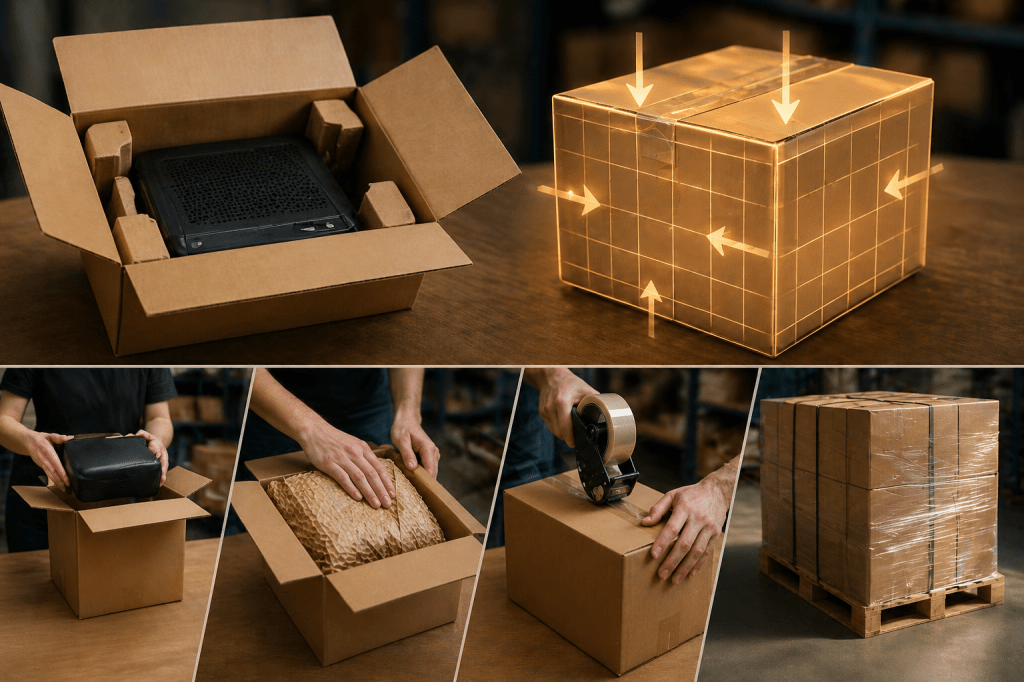
At the same time, pressure builds from the outside. Other boxes press down from above, especially during busy shipping times. If the top of your box isn’t strong enough, it starts to sink. Once that happens, the sides begin to push outward, and the structure weakens quickly.

This is where many shipments start to fail.

What most people don’t realize is that a strong shipping box doesn’t just resist damage. It controls what happens inside it. When the size is right and the structure is solid, the item stays in place. The weight is spread evenly, and the box handles the pressure without losing its shape.

That’s the difference between hoping something arrives safely and knowing it will.

There’s also a rhythm to good packing that people develop over time. It starts to feel smoother. You’re not stopping to second guess your choices or adjust things after the fact. The box fits, the item sits properly, and the seal holds without needing extra work.

That kind of consistency matters, especially when you’re sending out multiple orders.

It also reduces waste in ways that aren’t always obvious. When you’re not filling large empty spaces or replacing damaged shipments, you’re using less material overall. That’s not just better for cost. It’s a more responsible way to run your operation without overcomplicating things.

Over time, those small improvements build on each other.

Fewer damaged packages. Less time spent fixing problems. More confidence in every order that goes out.

Shipping boxes may seem simple, but they carry more responsibility than most people give them credit for. They’re the final step before your product reaches someone else, and they shape how that moment feels.

When you take a second to get that part right, everything that comes after gets easier.

And once you see the difference, it’s not something you overlook again.